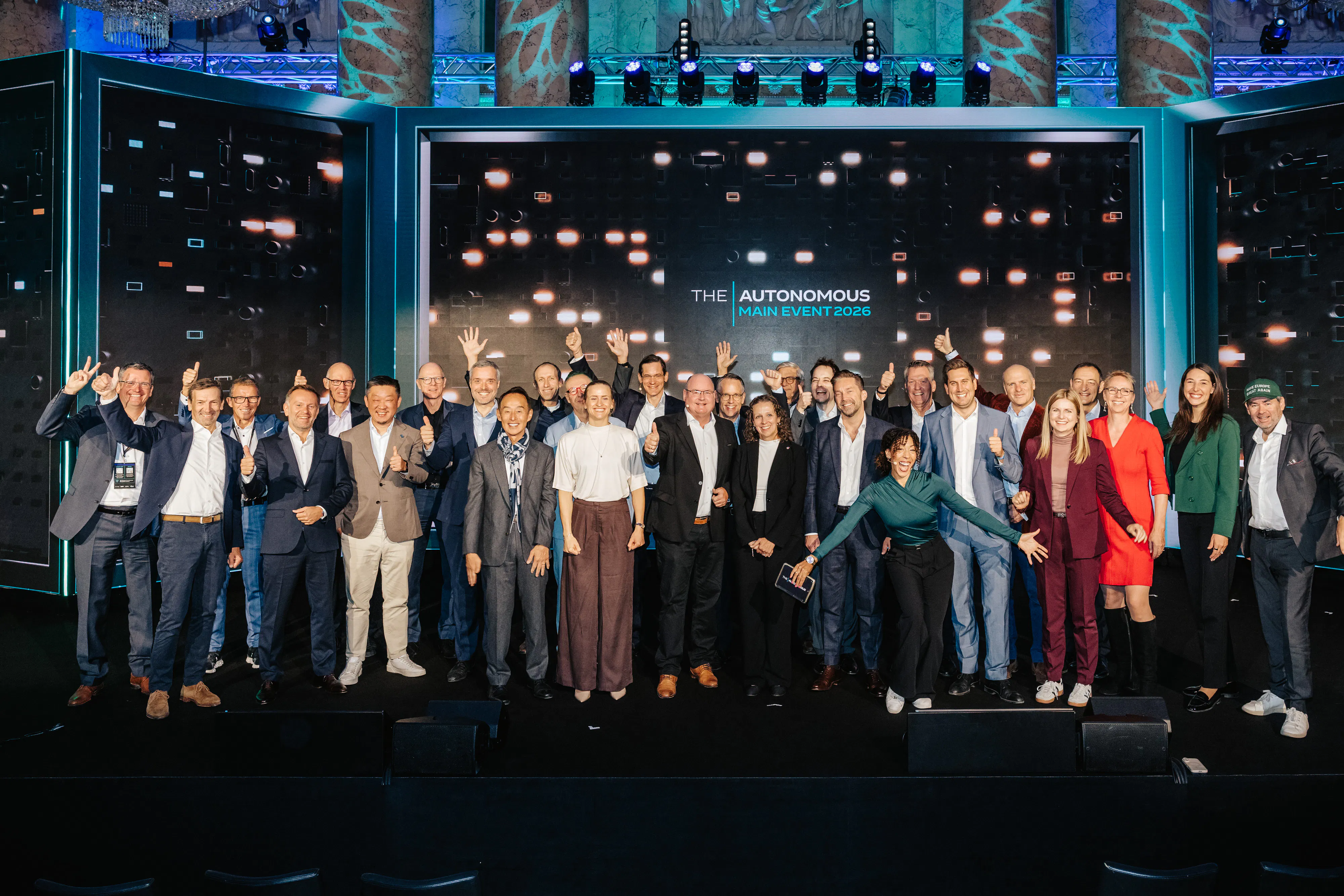
The Autonomous Main Event returned to Vienna with a question extending across vehicles, industrial machines, and robots. What must change for autonomous systems to become dependable enough for deployment at scale? In its seventh year, the event explored the conditions for adoption under the theme of Building Trust for Autonomy to Scale.
The event took place at the Hofburg on 23-24 September 2026. Virtual participation was available for the main-stage programme on the second day. The event attracted 600 registered participants and 327 companies from Europe, the USA, Israel, China, Japan, South Korea, and many other countries.
Trust and collaboration across industries have been at the heart of The Autonomous since its launch in 2019. This year’s programme developed those themes through questions about daily operation, verification, and responsibility throughout a system’s life. Three connected challenges provided the framework:
- How can autonomous machines earn and maintain the confidence of the people working around them?
- Which foundations can vehicles and robots share without overlooking differences in their operating conditions?
- What evidence and organizational support are needed to move from pilots into sustained deployment?
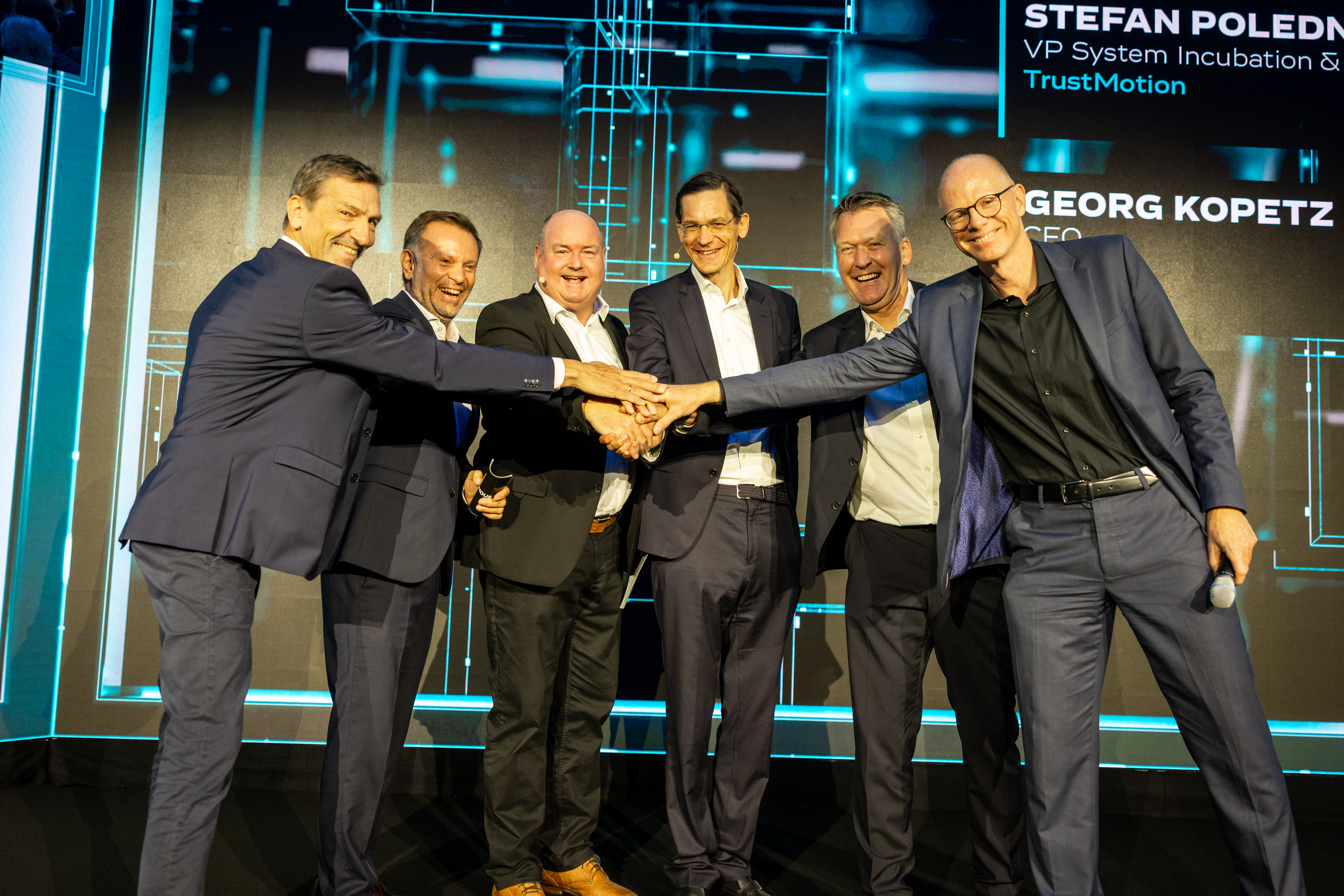
Technical workshops on the first day provided the groundwork for the keynotes and panels that followed. Across the programme, the engineering choices behind autonomy were linked with the practical requirements of operating it.
Workshops explored the engineering and regulatory foundations for deployment
The four workshops connected system architecture, regulatory evidence, and practical testing with the challenge of scaling autonomy.
The Safety & Architecture Working Group explained the concepts currently being developed across its three active workstreams, each of which is planned to result in a whitepaper within the next few months. Workstream “Safe AI for Automated Driving” proposes a scalable approach for integrating advanced artificial intelligence (AI) into advanced driver-assistance systems (ADAS) and automated driving (AD) via a combination of architectural measures, robustness measures, and a combined safety lifecycle. Workstream “Sufficient Diversity for Safety of the Intended Functionality (SOTIF)” develops a methodological addition to the ISO 21448 process for evaluating the diversity of redundant elements. Workstream “One Chip Compute” investigates best practices and limitations of up-integration, i.e., consolidating many functions on few chips.
MSG Plaut approached the challenge through regulatory boundaries. Its framework asked what each regime regulates, who carries responsibility, and which evidence demonstrates compliance.
Infineon’s workshop explored divided intelligence between central compute, zone controllers and microcontrollers beside sensors and actuators. It also explored incorporating physical laws into neural networks to constrain behavior and support adaptation to mechanical wear.
AIT’s workshop examined restricted-access environments across pilot projects as they transition towards industrial deployment. Construction sites, intralogistics, and automated valet parking could combine realistic operations with controlled boundaries and established safety measures.
A formal association for shared foundations
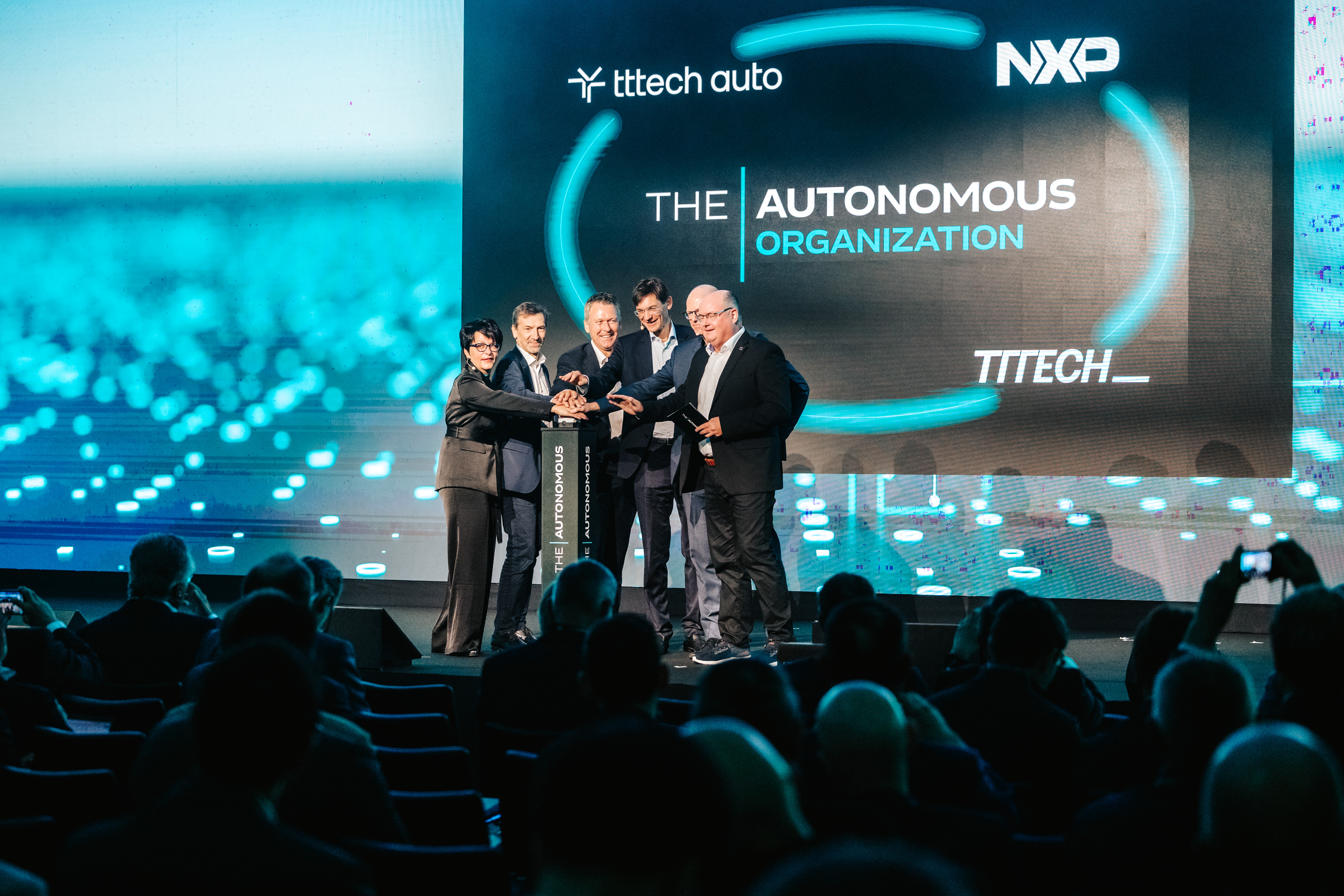
With the ambition of strengthening collaboration across multiple industries, The Autonomous Association was founded to act as an organizational framework. Its full name is The Autonomous – Global Platform for Safe Autonomous Systems and Robotics. The founding members are NXP, TrustMotion, Infineon, TTTECH and Qualcomm.
The association builds on the initiative established in 2019 by TTTech Auto, now TrustMotion, part of NXP. Its remit encompasses automotive, robotics, and industrial automation, with further autonomous applications included in its wider scope. The Autonomous proposes working groups, expert forums, and publications to address common engineering challenges.
Ricky Hudi, Chairman of The Autonomous Association, set out the rationale in a recent association announcement. “The future of autonomy depends on industry-wide collaboration,” he said.
The Autonomous Association is a neutral, independent, and open platform. It aims to support shared technologies, standards, and practices that individual companies need when deploying autonomous systems. Progress will depend on how those collaborative activities translate into usable engineering guidance.
Peter Schaefer of Infineon argued that trust begins with safety and security built into the semiconductor foundation. Scaling requires collaboration across AI, hardware, software, and system optimization instead of companies solving these challenges independently.
Lars Reger of NXP described a wider shift from on-demand systems towards devices that anticipate and automate. Users must trust a device before handing responsibility to it. This principle extends from cars to robots, drones, and other connected systems.
Across the founding members, safety, security, and robustness emerged as shared foundations rather than competitive differentiators. The association therefore provides a structure for developing common standards, architectures, and engineering practices across autonomous industries.
Find more in the press release published on September 24, 2026:
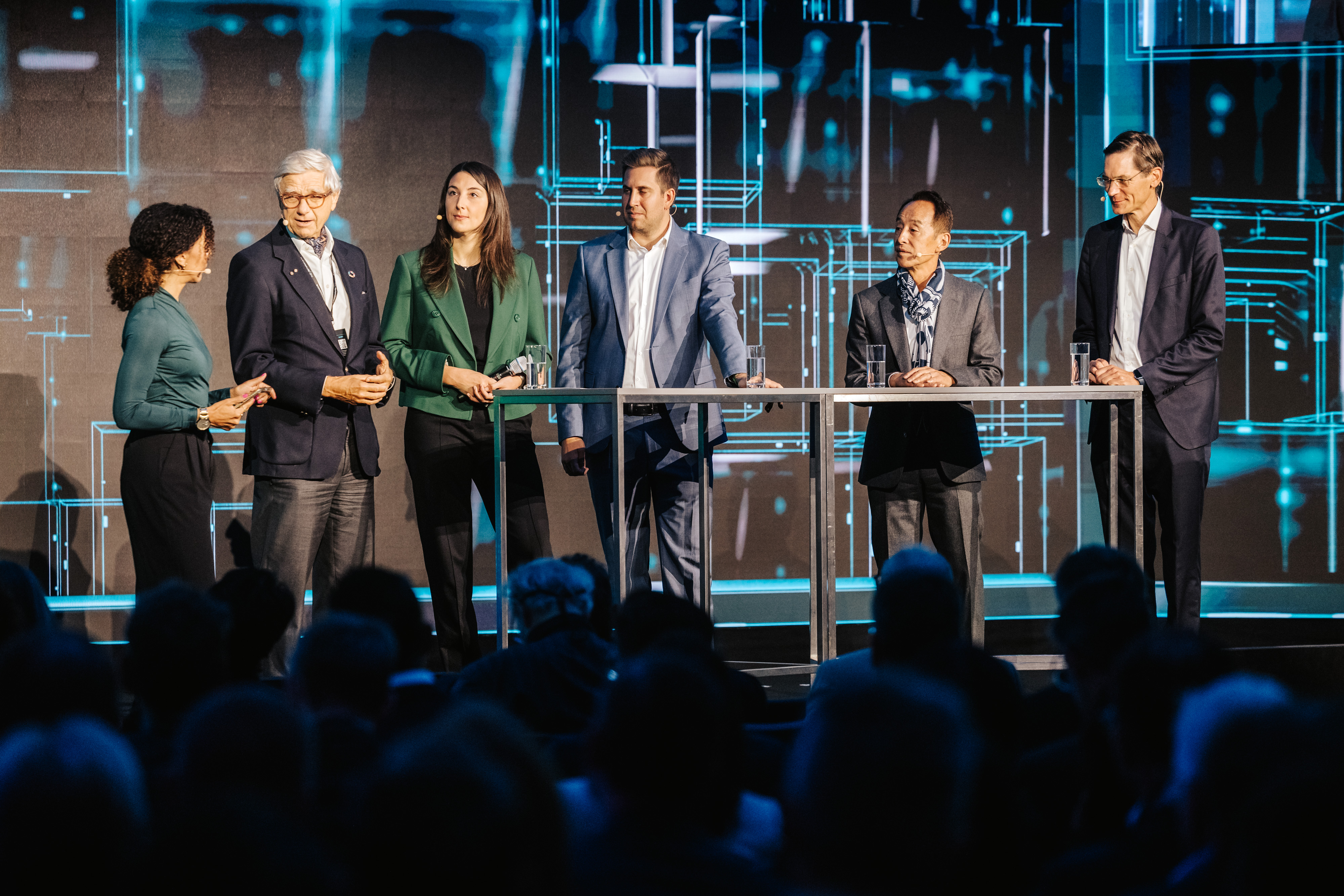
The opening fireside chat brought industrial, investment, and policy perspectives into the same conversation. Participants included Hermann Hauser, Co-founder and Venture Partner at Amadeus Capital Partners, and Georg Kopetz, CEO of TTTECH. Young Sohn, Founding Managing Partner of Walden Catalyst Ventures, brought a further investment perspective. Austrian State Secretary Alexander Pröll and European Parliament member Sophia Kircher completed the line-up. The combination reflected the event’s emphasis on responsibility extending beyond the technology supplier.
The discussion moved from technical trust to the wider conditions required for autonomy to scale commercially in Europe. Regulation emerged as both an advantage and a constraint. Common rules can support trust, but fragmented implementation across European markets can slow testing and deployment.
Participants called for regulation that keeps pace with technology and makes real-world experimentation easier. Financing was another constraint. Europe was described as strong in universities and startups, but weaker at retaining companies through the scale-up stage.
The outcome was a call to move faster from pilots into deployment. Priorities included simpler approvals, growth capital, stronger technology skills, and more real-world autonomous deployments. Trust therefore depended on safe technology and institutions capable of taking it to scale.
Earning trust in daily operation
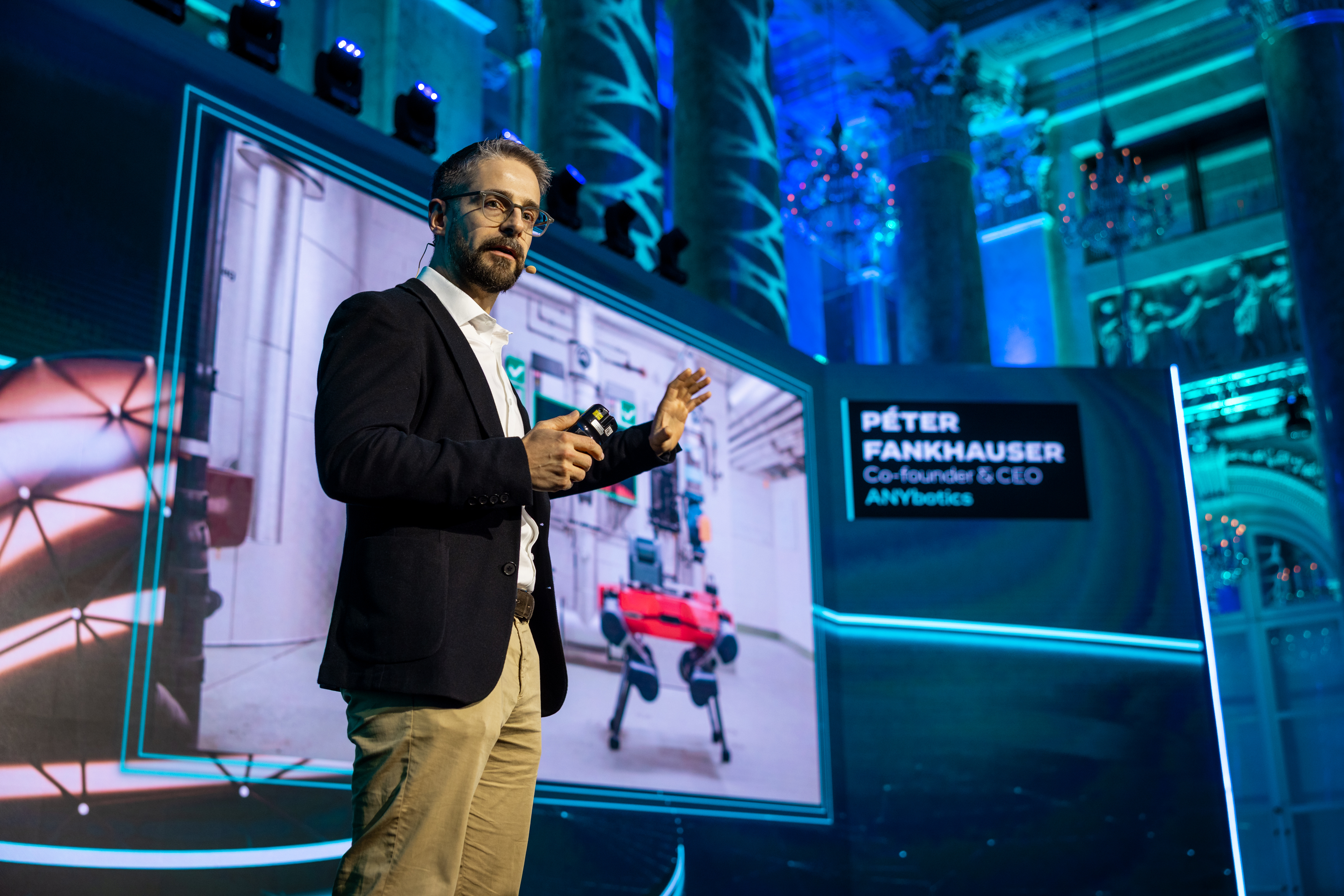
For industrial operators, trust becomes tangible when a machine must perform the same task reliably, day after day. That was the practical starting point for How Autonomous Robots Earn Their Place. The keynote by Péter Fankhauser, Co-founder and CEO of ANYbotics, examined inspection and asset integrity monitoring in industrial facilities.
His account drew on applications in refineries, steel plants and power stations, where autonomous mobile robots can inspect equipment to identify problems before they cause an unplanned shutdown. The business value depends on reliable operation and the confidence of the people responsible for the facility.
Fankhauser’s framework identified four requirements: safety, consistency, transparency, and security. Together, they connect a robot’s technical performance with an operator’s willingness to depend on it. A useful inspection result must be repeatable, while a system’s behavior must remain understandable to those working around it.
The keynote also examined how human involvement changes as confidence develops. People may move from directly participating in operations to supervising them. Greater independence follows demonstrated reliability. The transition depends on what operators can confidently delegate in their particular environment.
The route to operation also appeared in Johann Jungwirth’s keynote, From Technology to Mobility: Mobileye’s AV Vision. Jungwirth is Mobileye’s Executive Vice President of Autonomous Vehicles. His proposition linked an ambition to operate Mobileye’s own autonomous fleet with its technology business, with their operational experience supporting system validation and Mobileye’s work with partners.
Jungwirth described a system combining 13 cameras, LIDAR scanners, and five imaging radars. He also discussed redundant steering and braking systems, alongside sensor cleaning and cooling. At present, Jungwirth reported that more than 100 Mobileye Drive vehicles were operating worldwide, still with safety drivers. Driver-less operations are targeted for the second half of 2027.
What can cars and robots share?
The relationship between automotive experience and robotics ran through From Cars to Robots: Shared Foundations for Safe and Trusted Autonomy. Hosted by Infineon and NXP, the panel examined the system architecture behind both domains. Compute, power distribution, communication, and actuation all influence how an autonomous machine behaves when something goes wrong.
The panel brought together Lars Reger, CTO of NXP, and Peter Schäfer, EVP and CSO Automotive at Infineon. They were joined by Mathias Pillin of Bosch, Arne Nordmann of NEURA Robotics and Riccardo Mariani of NVIDIA. Their organizations span semiconductor technology, vehicle systems, robotics, and AI computing.
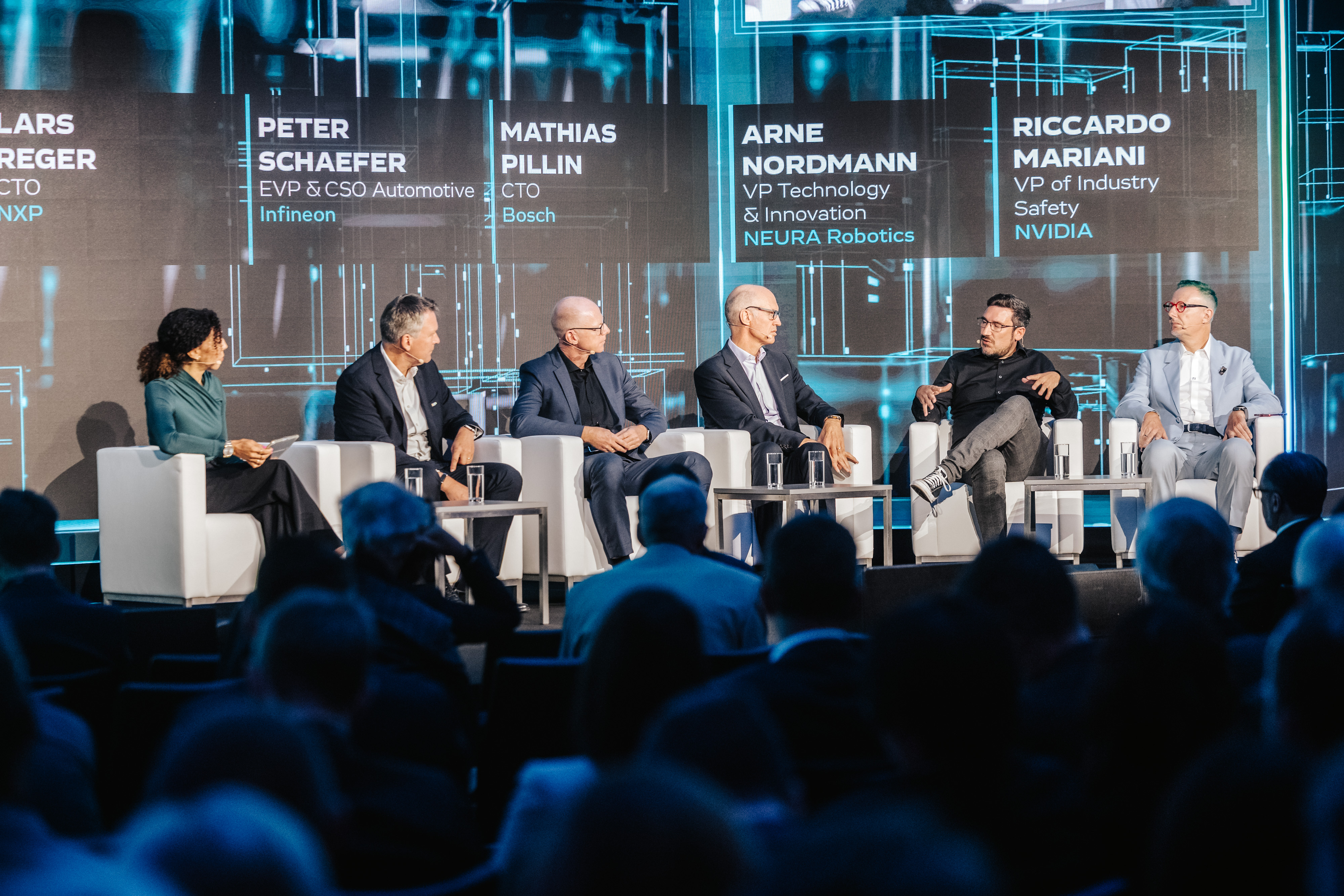
The central question concerned which engineering foundations could transfer between applications. Designing for automotive applications can offer potential learnings in manufacturing scale, quality control, and system robustness, but applying those lessons requires understanding a robot’s operating conditions and the consequences of failure.
Peter Schaefer compared the electronic architectures behind software-defined cars and robots. Both can combine AI compute, a safety core, and high-speed communications. Humanoid robots, however, face different constraints around power, space, sensing, and deterministic control.
Lars Reger pointed out that trust must be the first architectural requirement. He defined trust through safety and security, designed into the system before intelligence or performance optimization. AI can then operate within defined boundaries instead of determining every aspect of system behavior.
Reger added that functional safety itself must evolve as autonomous systems become more capable. Stopping after detecting a fault may no longer represent the safest response. Systems may need enough intelligence to understand their situation while deterministic mechanisms constrain unacceptable behavior.
Schaefer made a related argument about transferring automotive safety experience into robotics. Automotive previously borrowed from aviation, selecting established methods and adapting them where necessary. Robotics can follow the same path instead of copying automotive processes wholesale.
A robot holding an object, for example, may create additional danger by simply releasing it after a fault. Safety therefore becomes situational, requiring the machine to determine the lowest-risk controlled response.
Mathias Pillin delved into how Bosch’s requirements spanned more than 200 plants: robots needed to contribute immediately to production and be able to be updated in under 30 minutes.
Another topic discussed was how teaching the task can be difficult before assessing reliability. Arne Nordmann described welders recognizing a successful weld by its sound, but capturing that knowledge in simulation is difficult when the expert cannot describe precisely what they hear. Nordmann also challenged the assumption that a robot’s task and environment remain fixed. Changing either can alter the conditions under which dependable behavior must be established.
Riccardo Mariani identified another difference: robots may need close physical interaction with people. When this is the case, additional safety methods must be included to negate the possibility of harm to humans when interacting with them. The conclusion was that many of these considerations are similar to those made by the automotive industry that the robotics industry could learn from.
The panel did not conclude that robots should simply copy cars. Its outcome was a selective transfer of automotive experience, adapted for tactile interaction, changing tasks, and faster development cycles.
Physical AI depends on the whole system
Humanoid robots make the interaction between intelligence and physical hardware particularly visible. Perception, movement, and contact with the environment depend on coordinated sensing, control, and power delivery.
Philipp von Schierstaedt of Infineon addressed this relationship in The Future of Physical AI is Built on Chips. His keynote covered the semiconductor functions supporting a robot’s perception and movement. It placed power, control, sensing, and connectivity alongside functional safety and security.
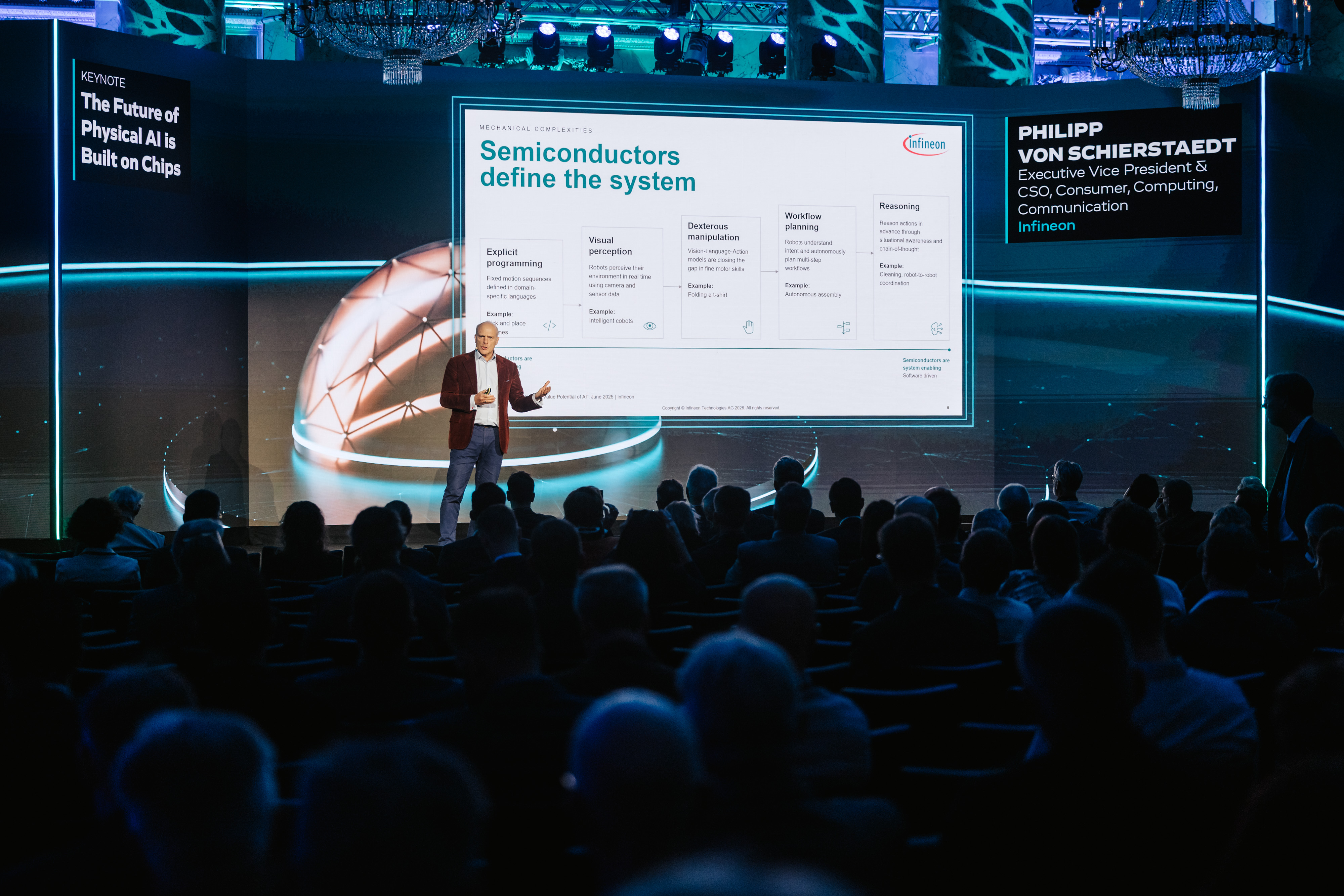
He described a laboratory robot lifting an empty eggshell, a demanding example of controlled contact. In this type of application, a robotic finger must fit sensing, control, and power electronics into a much smaller space than, for example, a hip joint.
Von Schierstaedt linked gallium nitride power devices with higher power density and smaller motor electronics, which helps to reduce space within the package. He also discussed increasing supply voltage to reduce copper weight, with additional insulation requirements, as well as protective functions in hardware and control to account for physical contact with people and the robot’s intended movement.
Overall, Von Schierstaedt argued that the ongoing miniaturization of electronics continues to expand the capabilities of humanoid robots in the present and the future. He made a related point in the association announcement. “Semiconductors are the foundation on which this transformation is built, enabling systems to scale across industries,” he said.
Keeping edge AI trustworthy after deployment
Deployment introduces another layer: how do you iterate and update an autonomous system while preserving confidence in its behavior? The TrustMotion-hosted panel Building Secure and Scalable Edge AI Frameworks for Autonomous Systems examined the complete development cycle.
Moderated by Stefan Poledna, VP System Incubation & CTO of TrustMotion, the session connected on-device intelligence with the infrastructure supporting it. The line-up included Christina Strohrmann of Bosch, Peng Xu of Horizon Robotics and Gilles Mabire of Valeo. Alexandre Corjon of Sonatus and Simone Fabris of Wayve added software and autonomous-driving perspectives.
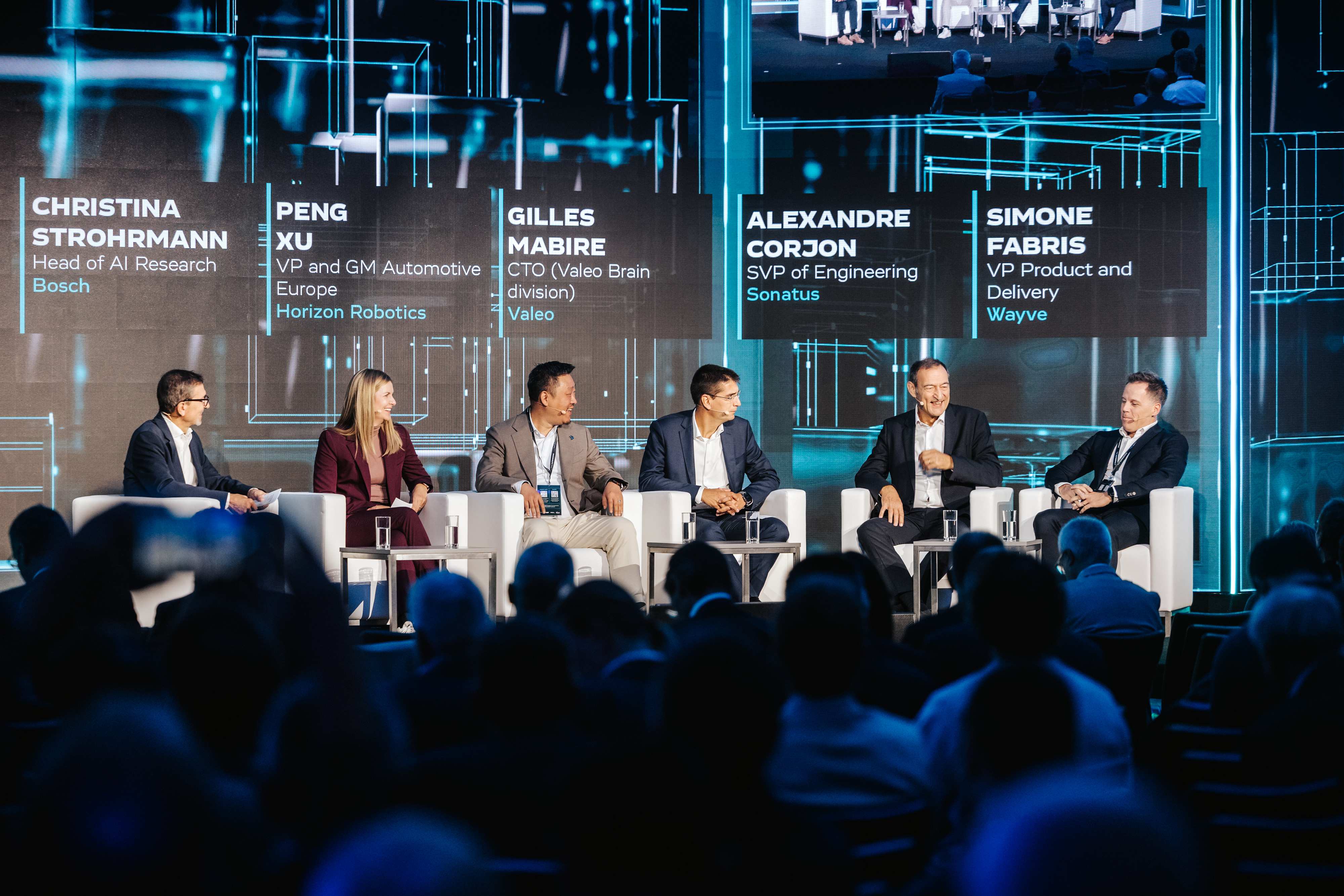
The discussion centered on a continuous cycle linking collected data, cloud-based model training, software updates, and deployed systems. Operational data can feed subsequent development, including performance indicators and previously unrecorded situations. An autonomous machine may contain several AI components from different suppliers, covering sensing, perception, decision-making, and control.
This creates questions at the interfaces between organizations as well as between technologies. What data should be collected, how should it be handled securely, and how can updates be delivered safely? How can the behavior of the complete system be monitored when its individual components continue to evolve?
To answer those questions, the panel examined how AI-based designs acquire credible safety evidence. Typically, one solution to improve AI model performance is to introduce more training data, but this does not automatically fix the most consequential gaps. The panel argued that rare, safety-relevant situations can contribute more useful information than additional examples of routine operation.
Other topics of the discussion included distinguishing failures from limitations in otherwise functioning systems, operational monitoring, and how much behavior should be “learned” versus where explicit constraints need to intervene.
Deploying AI across edge hardware
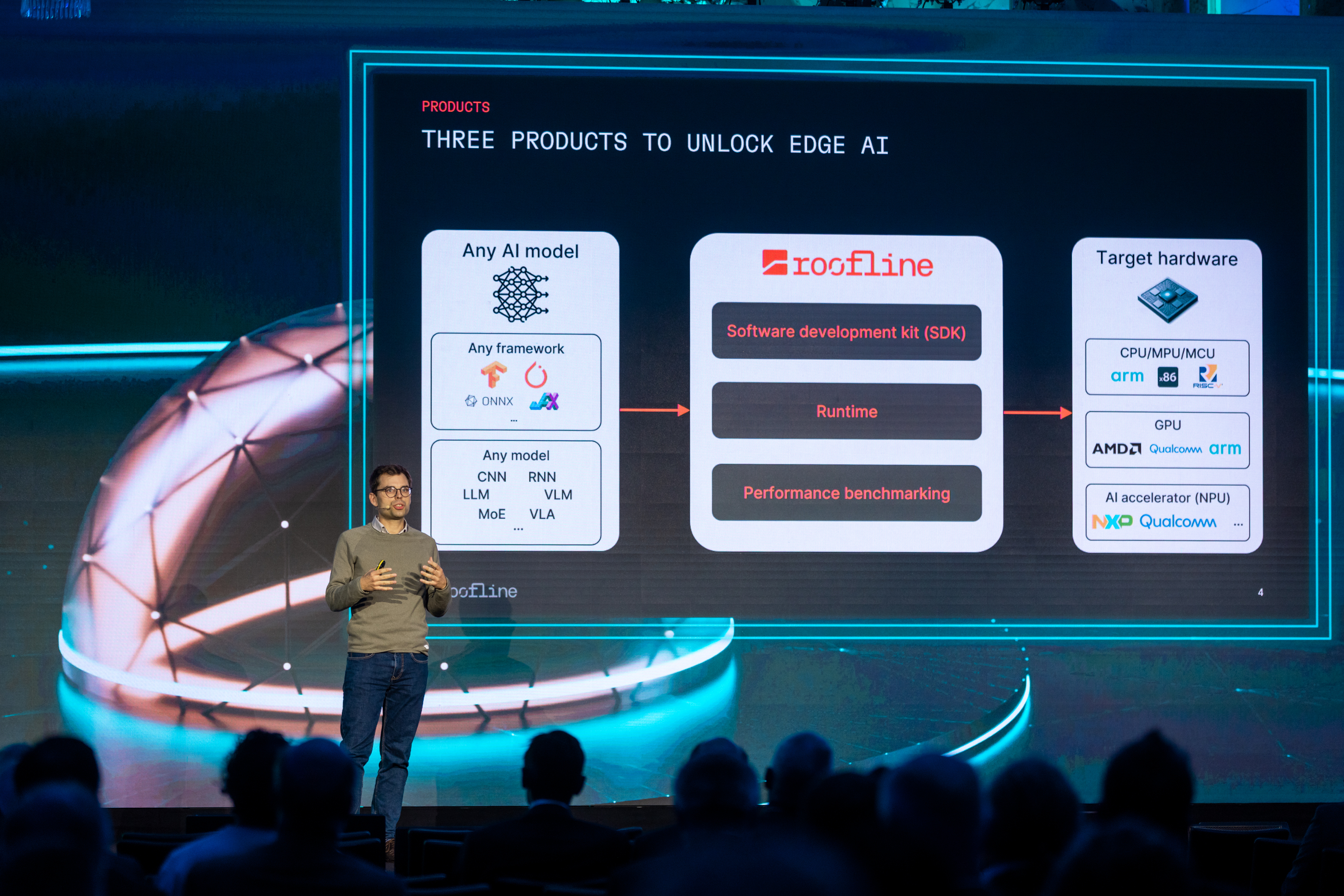
Roofline brought the deployment challenge down to the level of individual AI workloads. Co-founder and CEO Jan Moritz Joseph focused on the gap between a trained model and its edge deployment.
He said engineers can spend months modifying and revalidating models when target hardware lacks direct support. Roofline presented a cross-vendor deployment layer for generating executable workloads across central processing units (CPUs), graphics processing units (GPUs), and dedicated AI accelerators.
The presentation demonstrated the approach across industrial Internet of Things (IoT), home appliances, and robotics. One example used interchangeable models for factory fire detection. Another ran a compact language model on an NXP system using less than 5 watts. A robotics demonstration mapped vision-language-action workloads across a Qualcomm platform. The wider proposition was portability across models, processors, and complete systems.
Roofline positioned verified model-and-hardware combinations as a way to shorten development while maintaining predictable performance.
Building the organization around the AI
The systems supporting autonomy also include the people who develop, manage, and use it. Dorothee Andermann, Head of Technical Account Management at Google, approached this challenge through the limitations of isolated experiments. Her keynote was titled, Your 100 AI Pilots Are Not a Strategy: Are You Ready for Multi-Agent Orchestration?
Her proposition concerned the transition from disconnected task automation to coordinated systems involving multiple agents. It emphasized systems engineering, reliable data foundations, and executive governance. These requirements connect technical development with decisions about organizational responsibility and implementation.
That perspective complements the edge AI discussion. Development infrastructure can support continued improvement. An organization still needs a coherent approach to putting that improvement into practice. The common issue is whether the supporting system can sustain autonomy beyond the conditions of an individual experiment.
Could mobile machines scale first?
The path to adoption may differ substantially between applications. The TTControl-hosted off-highway panel asked whether mobile machines could reach scale sooner than passenger-car autonomy.
Moderated by Georg Stöger of TTTech Labs, the session brought together technology suppliers and machinery businesses. Participants included Eric Mazzoleni, VP Industrial IoT and Robotics Sales Europe of Qualcomm, and Ingo Stürmer, CTO of Volvo Autonomous Solutions. Thomas Biringer, CTO of Rosenbauer, and Matthias Benz, CEO of Zeppelin, completed the panel.
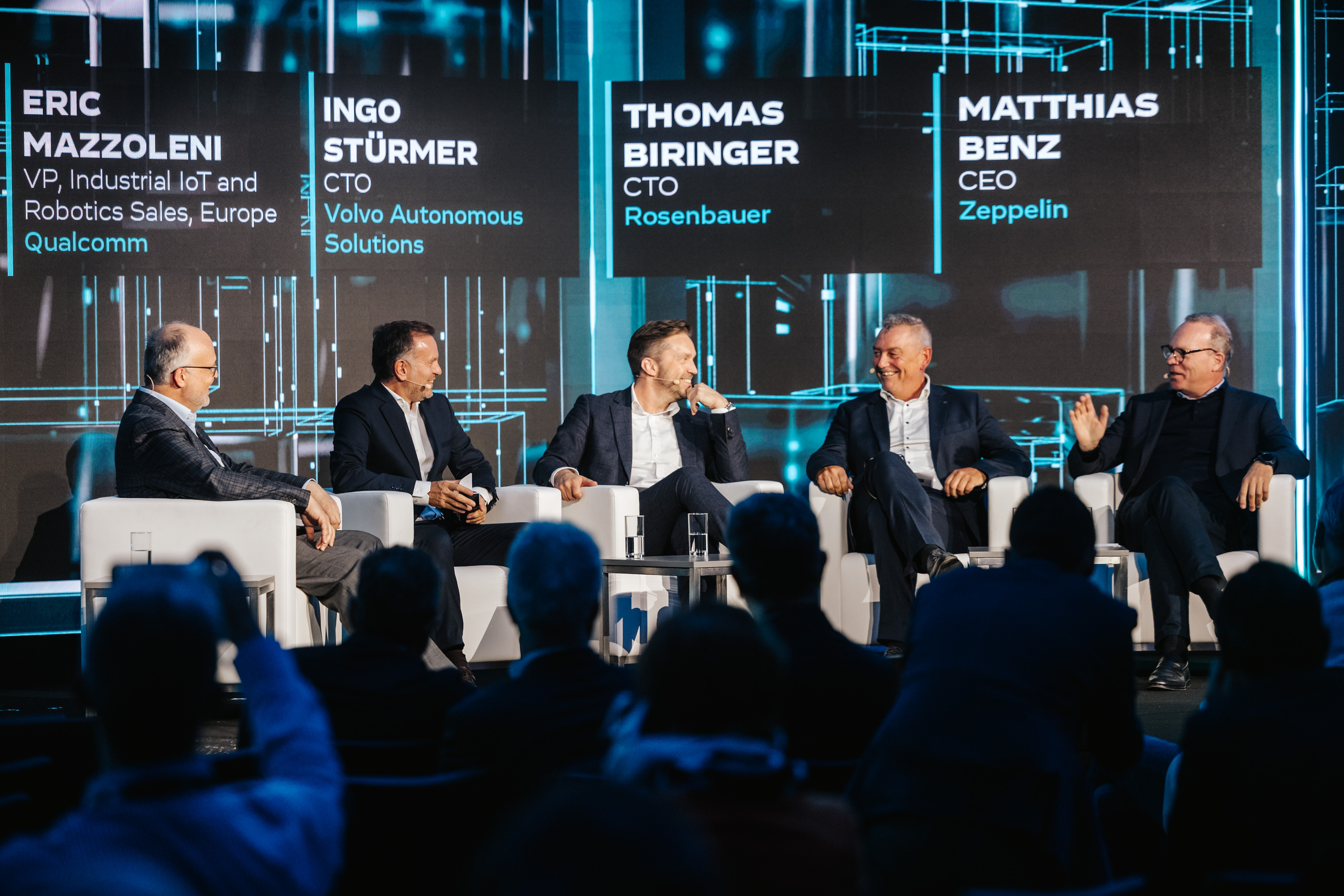
Its proposition rests partly on operational design domains: the conditions within which a system is intended to operate. Some off-highway environments offer more controlled conditions than public roads. A clearer operating task can also make the commercial benefit easier to assess. That may shorten the route to investment returns.
Ingo Stürmer described the integration with dispatching, loading, emergency stops, and human operators, explaining how winter conditions, mud, and dust introduce further variability into apparently repeatable routes. In his road-surface example, changing a vehicle’s path helps avoid concentrating heavy loads along identical tracks. Navigation choices therefore affect infrastructure maintenance as well as immediate vehicle movement.
Zeppelin’s Matthias Benz placed the emphasis on customer results. “Trust is a function of safety and productivity,” he said. Benz’s mining examples connected customer acceptance with equipment availability and productive output.
Emergency responses introduce different allocations of responsibility. Thomas Biringer described how machine assistance can be used on positioning and remote operation, while retaining human judgement over consequential decisions. Eric Mazzoleni proposed reusable platforms and application blueprints as Qualcomm’s contribution to deployment. The overall value of these systems still depends on integration with specific machinery and the operating environment.
The answer to “could machines scale first?” is multifaceted: combining environmental control and risk management. What was apparent from this panel was that semiconductor suppliers, software developers, and machinery manufacturers each have vital roles to play in the ultimate answer.
Verification and the route to deployment
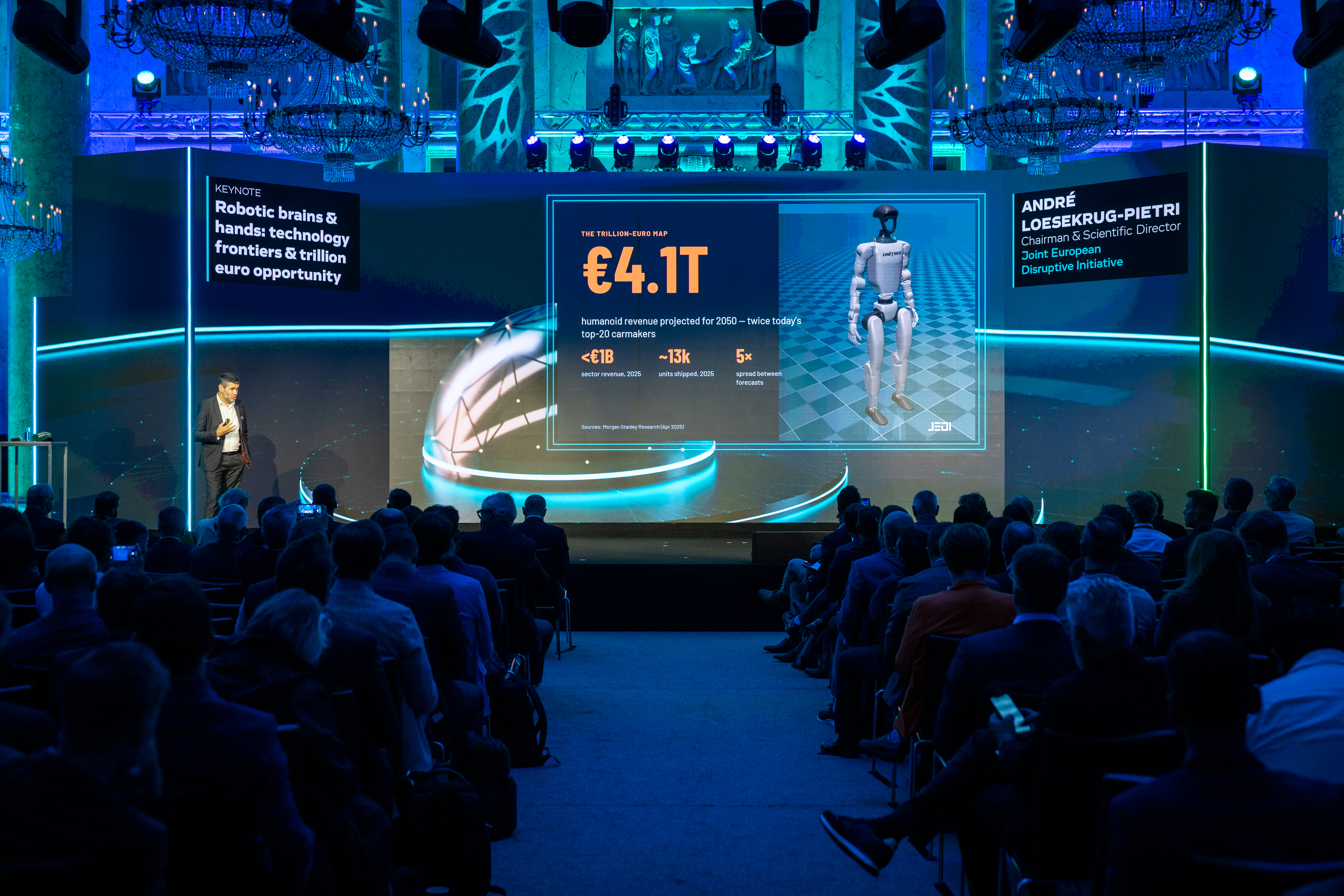
Trust also depends on evidence that can be examined beyond the organization developing the technology. André Loesekrug-Pietri is Chairman and Scientific Director of Joint European Disruptive Initiative (JEDI). He made verification of the operative idea of his keynote.
With Robotic brains & hands: technology frontiers & trillion euro opportunity, André Loesekrug-Pietri identified verification as an opportunity for Europe as robotic intelligence and hardware become more widely available.
“But the one thing that we cannot commoditize is trust,” he said. His distinction between robotic brains and hands exposed two connected difficulties. Interpreting a task is insufficient if sensing, actuators and response times cannot support the required movement.
Unfamiliar situations also test whether apparent competence survives beyond a pre-prepared demonstration. Loesekrug-Pietri argued for demanding technical challenges that make performance verifiable. His proposal connected competitions with procurement: successful technology should have a prospective buyer.
That proposition connected with the regulatory fireside chat hosted by PSWP. Frederic Geber, Partner at PSWP, moderated the session. Participants included Gesa Gräf of Starship Technologies and Franco Accordino of the European Commission. Maria Alonso, Autonomous Systems Lead at the World Economic Forum, completed the group.
The session framed regulation around the transition from testbeds to scale. In this session, Gesa Gräf championed requirements that would impose car-like supervision on delivery robots. She argued that oversight should reflect actual operating conditions and experience. Gräf described Starship developing its orange flag with an accessibility advisory board in the UK. Public engagement has therefore influenced a physical design feature.
Franco Accordino connected city demand with investment and European technology supply. His account linked deployment opportunities with feedback that could inform both industrial development and regulation.
Maria Alonso raised a different uncertainty: responsibility can be divided across several levels of government. She called for clear liability and emergency response arrangements: safety cases, the arguments and evidence supporting safe operation, as well as the need to evolve as technology changes.
Predictability and adaptation can pull in different directions. The discussion favored continuing dialogue so that new operating evidence can inform oversight without leaving responsibilities unclear.
The importance of the talk extended across developers, operators and public authorities, who all share responsibility when an autonomous system enters mainstream use. The ongoing challenge is to make those responsibilities clear and obvious.
Autonomous operation on the Moon
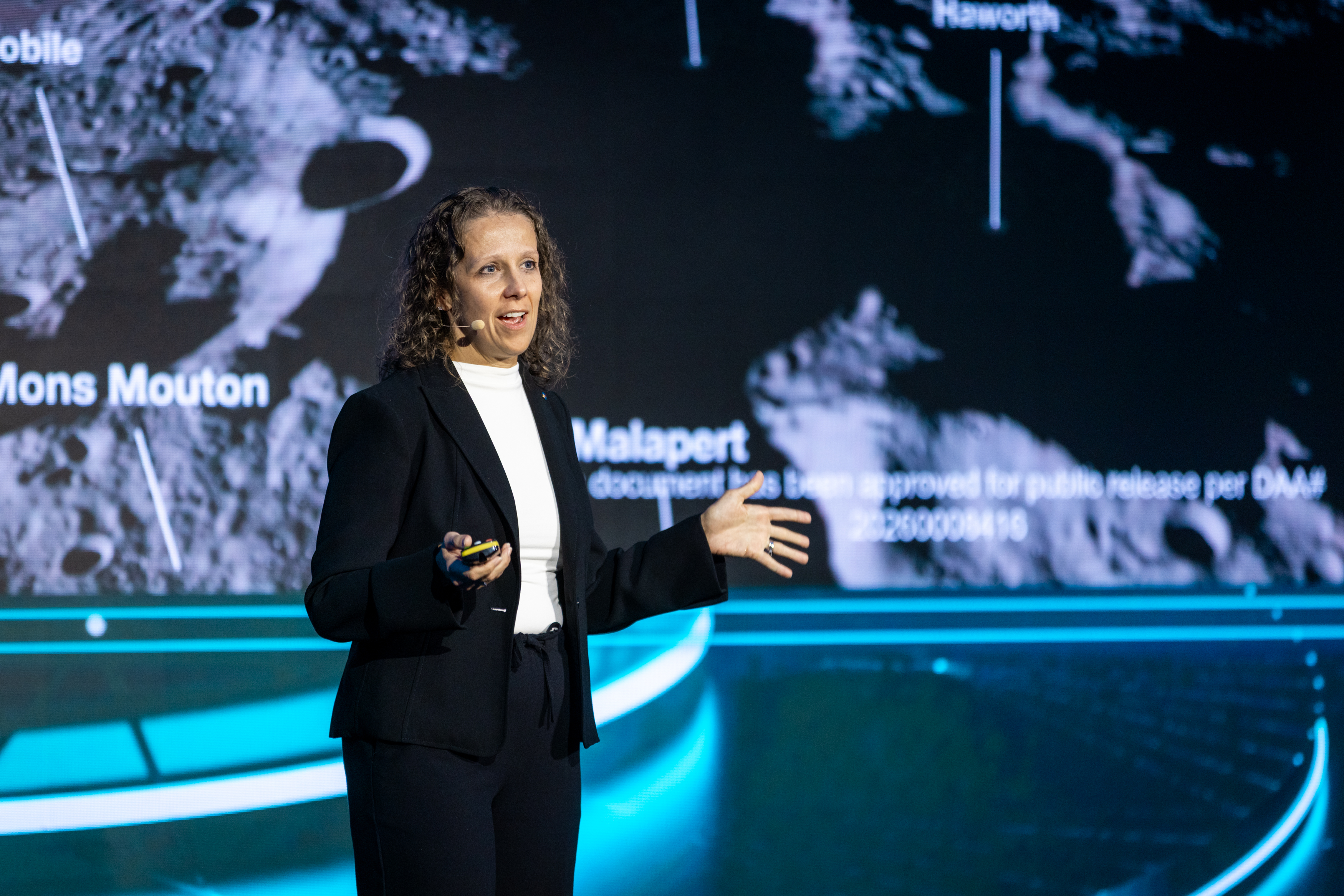
The focus shifted beyond Earth with Julia Badger, Moon Base’s Surface Mobility Deputy Director at NASA. She gave a keynote called NASA’s Moon Base: Autonomous Operations on the Moon, and addressed plans for a sustainable human outpost near the lunar south pole.
The keynote examined autonomous infrastructure, mobility, and robotics as enablers for building and maintaining Moon Base assets. It also addressed the challenges facing systems deployed on the lunar surface and NASA’s intended approaches to them.
Interoperability became an early design requirement in Julia Badger’s account of NASA’s planned lunar operations. Equipment from different providers would need compatible commands and an understanding of one another’s intended actions.
She outlined a phased programme of demonstrations, infrastructure development, and sustained operations. Charging arrangements, landing activity, and crew availability influence when a vehicle can work and what it must do independently. Power, communication, and mobility therefore need compatible assumptions from the outset.
Available computation imposes another constraint for power. Badger cited roughly 40-50 watts per processor, let alone the entire vehicle. She discussed simulation, mathematical verification, and monitoring during operation as complementary ways to assess and constrain behavior.
The lunar examples broaden the context for shared foundations while retaining the importance of application-specific requirements. It goes to show how important the operating environment is in determining what a system must demonstrate before people can depend on it.
Turning working-group discussions into engineering outputs
The Autonomous Update showed how event discussions continue through year-round working groups. The Safety of Embedded AI group reported that physical AI requires intelligence close to actuation. Its work combines established automotive safety and security methods with newer AI-specific challenges.
The Safety and Architecture group outlined three current workstreams and their planned technical outputs. They cover safe AI for automated systems, sufficient diversity for SOTIF, and one-chip compute. Three white papers are planned for late 2026 or early 2027, incorporating feedback gathered during the event.
The architecture work builds on eight conceptual designs previously evaluated for automated driving. One finding favored asymmetric architectures with an independent fallback path. The SOTIF work extends this towards methods for assessing sufficient diversity between redundant elements.
Another white paper will address gaps between existing safety standards and AI’s growing responsibility inside vehicles. One-chip compute examines centralization when a single system-on-chip hosts functions with different criticality levels. This gives the event a route from discussion into reusable engineering guidance.
Building trust through dependable operation
The Autonomous working groups provide a continuing route for addressing the questions raised by the event. Across inspection robots, autonomous vehicles, and planned lunar missions, one question connected to all of the discussions: what makes autonomy dependable in practice? The answer extended from individual components to the organizations responsible for deploying and maintaining complete systems. Safety architectures, reliable sensing and verification must work alongside secure updates, operational monitoring, and clear human responsibility.
Shared engineering foundations offer opportunities across automotive, robotics, and industrial machinery. However, each application brings different operating conditions, failure consequences, and commercial requirements. Testing in controlled environments can help teams gather evidence, but wider deployment requires understanding the shortcomings of testing conditions. Productivity also depends on how autonomous machines affect existing workflows, maintenance arrangements, and the people working around them.
The Autonomous Association and its working groups provide a framework for carrying these questions into continued engineering collaboration. Their value will depend on translating shared experience into methods that developers, operators, and regulators can use.
Building trust therefore remains an ongoing task throughout a system’s operation. Progress means demonstrating dependable behavior, recognizing limitations, and maintaining accountability as capabilities and operating conditions change.
Looking ahead
The 2026 Main Event closed with a focus on turning collaboration into practical progress.
The Autonomous Association and its working groups will continue discussions across safety, security, architecture, regulation and deployment. That work will continue towards The Autonomous Main Event’s eighth edition in Vienna on 22-23 September 2027.